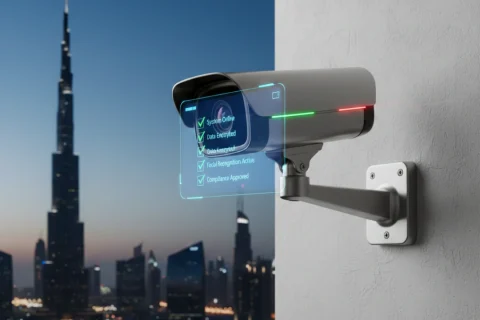
In today’s rapidly evolving security landscape, an Access Control System Dubai businesses rely on must deliver more than basic entry management. Modern enterprises require comprehensive security solutions that integrate advanced CCTV surveillance, biometric authentication, and intelligent monitoring capabilities. As Dubai continues to establish itself as a global business hub, organizations face increasing pressure to protect their assets, employees, and sensitive data from both physical and digital threats.
Key Takeaways
- Advanced access control systems in Dubai integrate CCTV, biometric technology, and smart automation to create comprehensive security ecosystems for businesses across all sectors
- ELV system integration enables seamless connectivity between access control, surveillance, and building management systems, reducing operational costs while enhancing security effectiveness
- SIRA-approved security solutions ensure compliance with Dubai’s regulatory standards while providing scalable protection that grows with your business needs
Understanding Modern Access Control Systems
What Makes Dubai’s Security Landscape Unique
Dubai’s position as an international business center creates unique security challenges that demand sophisticated solutions. The city’s diverse commercial landscape—from free zones and corporate towers to retail complexes and industrial facilities—requires security systems that adapt to varying threat levels and operational requirements.
An effective Access Control System Dubai organizations implement today goes beyond traditional lock-and-key mechanisms and is supported by an ELV system for buildings. These systems leverage cutting-edge technology including facial recognition, mobile credentials, and cloud-based management platforms. The integration with video surveillance creates a powerful security ecosystem supported by Smart automation systems. Access events trigger recording, alerts reach security personnel instantly, and audit trails maintain comprehensive records for compliance purposes.
Core Components of Next-Generation Access Control
Modern access control architectures consist of several interconnected elements working in harmony. Card readers, biometric scanners, and mobile access points serve as the first line of authentication. These devices connect to intelligent control panels that process credentials against stored permissions in milliseconds. The system’s brain—sophisticated access control software—manages user permissions, monitors real-time activity, and generates detailed reports for security audits.
Electronic locks and electromagnetic door holders respond instantaneously to authentication signals, while door position sensors confirm proper closure and alert security teams to tailgating attempts. This multi-layered approach ensures that only authorized individuals gain entry while maintaining detailed logs of all access events across your facility.
Integration with CCTV and Smart Security Systems
Creating Unified Security Ecosystems with Access Control System Dubai
The true power of contemporary Access Control System Dubai solutions emerges through integration with video surveillance infrastructure. When someone presents credentials at an access point, linked CCTV cameras automatically capture high-resolution footage, creating visual verification of each entry event. This integration proves invaluable during security investigations and provides concrete evidence for incident resolution.
Smart ELV system for buildings form the backbone of these integrated solutions, connecting access control, CCTV, intrusion detection, and building automation systems through unified platforms. Businesses implementing such comprehensive approaches report significant improvements in response times to security incidents and dramatic reductions in false alarms.
Advanced Features Transforming Business Security
Biometric Authentication Technologies
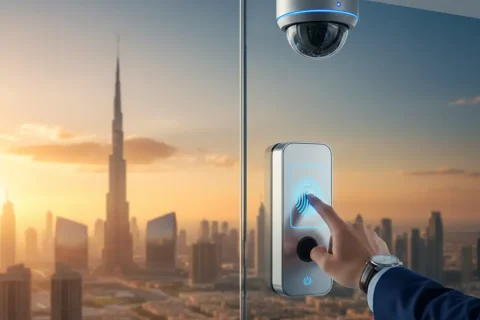
Fingerprint scanners, facial recognition cameras, and iris readers have evolved from science fiction to practical security tools. These biometric systems eliminate concerns about lost cards or shared credentials while providing unmatched accuracy in user identification. Modern biometric readers process authentication in under two seconds, maintaining smooth traffic flow even during peak hours.
Mobile Credentials and Cloud Management
Mobile access credentials transform smartphones into secure keys, offering convenience without compromising security. Employees receive encrypted credentials through secure apps, enabling instant provisioning for new hires and immediate deactivation for departed staff. Cloud-based management platforms allow security administrators to monitor multiple facilities from any location, responding to incidents and adjusting permissions in real-time.
AI-Powered Analytics and Threat Detection
Artificial intelligence elevates security systems from reactive tools to proactive protection mechanisms. Smart automation systems analyze access patterns, identifying unusual behavior that might indicate security breaches. The system learns normal traffic flows and alerts security personnel when deviations occur, such as unauthorized after-hours access attempts or access cards used simultaneously at multiple locations.
Benefits for Dubai Businesses
Enhanced Security and Risk Mitigation
Organizations implementing comprehensive Access Control System Dubai solutions experience measurable security improvements. Unauthorized access incidents decrease by up to 85% compared to traditional key-based systems. The elimination of physical keys removes risks associated with lost or duplicated credentials, while detailed audit trails satisfy regulatory compliance requirements across industries.
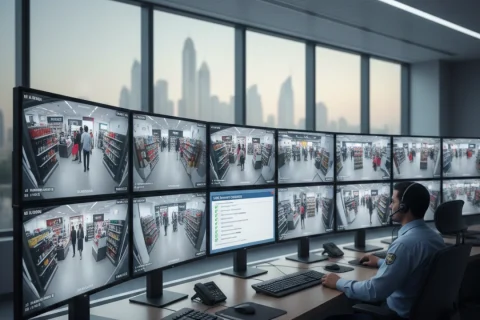
Real-time monitoring capabilities enable immediate response to security events. When someone attempts unauthorized access, the system simultaneously locks down the area, alerts security personnel, and begins recording CCTV footage. This coordinated response prevents security breaches before they escalate into serious incidents.
Operational Efficiency and Cost Savings
Beyond security benefits, modern access control systems streamline facility management and reduce operational costs. Automated door scheduling eliminates manual locking and unlocking routines, while integration with HVAC and lighting systems optimizes energy consumption based on occupancy. Facilities report energy cost reductions averaging 20-30% after implementing integrated access control and building automation solutions.
The systems also enhance visitor management processes. Pre-registration capabilities allow guests to receive temporary credentials before arrival, reducing reception bottlenecks and improving the visitor experience. Integration with elevator controls can automatically direct authorized visitors to appropriate floors while restricting access to sensitive areas.
Scalability and Future-Proofing
As businesses grow, their security requirements evolve. Cloud-based Access Control System Dubai platforms scale effortlessly from single-site installations to enterprise-wide deployments across multiple locations. Adding new doors, users, or facilities requires simple configuration changes rather than expensive hardware overhauls.
The modular architecture of contemporary systems supports gradual capability expansion. Organizations can start with basic access control and progressively add video analytics, license plate recognition, or integration with other business systems as needs and budgets allow.
Industry-Specific Applications
Commercial Real Estate and Corporate Offices
Corporate environments benefit significantly from sophisticated access control implementations. Multi-tenant buildings use the technology to create distinct security zones while maintaining centralized management. Tenant companies receive administrative access to manage their employees without affecting other building occupants, while property managers retain oversight of common areas and building systems.
Retail and Hospitality Sectors
Retail operations leverage access control to protect inventory, secure cash handling areas, and monitor employee movements. Integration with point-of-sale systems creates comprehensive audit trails tracking staff access to sensitive areas during cash reconciliation periods. Hotels implement the technology for guest room access, staff area restrictions, and amenity management.
Industrial and Manufacturing Facilities
Manufacturing environments face unique challenges requiring specialized solutions. Industrial access control systems restrict entry to hazardous areas based on safety certifications while tracking personnel locations for emergency evacuation purposes. Integration with time and attendance systems provides accurate labor tracking and compliance reporting.
Healthcare and Education Institutions
Healthcare facilities utilize access control to protect patient privacy, secure pharmaceutical storage, and restrict access to sensitive medical equipment. Educational institutions implement the technology for campus security, controlling building access during off-hours while allowing authorized access for students, faculty, and staff.
SIRA Compliance and Regulatory Standards for Access Control System Dubai
Dubai’s Security Industry Regulatory Agency (SIRA) mandates specific requirements for security system installations. Businesses must work with SIRA-approved security companies to ensure full compliance with local regulations. These certified providers understand Dubai’s unique security landscape and deliver solutions meeting both regulatory requirements and operational needs.
SIRA compliance extends beyond initial installation to include ongoing maintenance, system upgrades, and periodic audits. Certified providers maintain detailed documentation of system configurations, ensuring transparency and accountability throughout the security infrastructure lifecycle.
Selecting the Right Solution Provider
Critical Evaluation Factors
Choosing an Access Control System Dubai provider requires careful consideration of several factors. Evaluate providers based on their technical expertise, industry experience, and commitment to ongoing support. Request detailed case studies demonstrating successful implementations in similar business environments.
Technical capabilities matter significantly—ensure providers offer comprehensive integration options, support for multiple authentication methods, and robust cybersecurity measures protecting against unauthorized system access. The provider’s ability to customize solutions for your specific requirements often proves more valuable than one-size-fits-all approaches.
Implementation and Support Considerations
Professional installation ensures optimal system performance and longevity. Experienced CCTV and security system installers conduct thorough site surveys, identifying optimal equipment placement and addressing potential installation challenges before they impact project timelines.
Post-installation support determines long-term system effectiveness. Verify that providers offer comprehensive training for security personnel and administrators, along with responsive technical support and regular maintenance services. System updates and security patches must be applied consistently to maintain protection against evolving threats.
Future Trends in Access Control Technology
The security industry continues advancing rapidly, with several emerging technologies poised to transform access control capabilities. Artificial intelligence will enable increasingly sophisticated threat detection, while blockchain technology promises enhanced security for credential management and audit trails.
Integration between physical and cybersecurity systems will deepen, creating holistic security approaches protecting both digital and physical assets. The convergence of IoT devices, access control, and building management systems will deliver unprecedented insights into facility operations and security effectiveness.
Conclusion
Implementing a comprehensive Access Control System Dubai solution represents a strategic investment in your organization’s security, operational efficiency, and future readiness. The integration of advanced access control with CCTV surveillance, ELV systems, and smart automation creates security ecosystems that protect assets while streamlining operations. As Dubai’s business landscape continues evolving, organizations equipped with next-generation security infrastructure will maintain competitive advantages through enhanced protection, improved efficiency, and regulatory compliance.
Ready to transform your business security with cutting-edge access control solutions? Contact VITS today to discover how our comprehensive security systems can protect your assets, streamline operations, and position your organization for future growth in Dubai’s dynamic business environment.
FAQ
1. What is an Access Control System Dubai businesses use?
An Access Control System Dubai businesses implement is an integrated security solution combining biometric authentication, card readers, and electronic locks with CCTV surveillance. These systems manage facility access, monitor entry points, and maintain detailed audit trails for regulatory compliance and enhanced security.
2. How do ELV systems integrate with access control solutions?
ELV system for buildings creates unified infrastructure connecting access control, CCTV, intrusion detection, and building automation. This integration enables centralized management, reduces installation costs, and allows security events to trigger coordinated responses across multiple systems.
3. Why should businesses choose SIRA-approved access control systems?
SIRA-approved systems ensure compliance with Dubai’s security regulations while providing certified installation quality and ongoing support. These systems meet stringent safety standards, offer reliable performance, and protect businesses from regulatory penalties.
4. What are the costs of installing access control systems in Dubai?
Installation costs vary based on facility size, number of access points, authentication methods, and integration complexity. Basic systems start around AED 5,000, while enterprise solutions with biometric authentication and automation systems can exceed AED 50,000, including hardware, software, and professional installation.
5. Can access control systems work with existing CCTV infrastructure?
Modern access control solutions integrate seamlessly with existing CCTV systems through standardized protocols. This compatibility allows businesses to leverage current investments while adding advanced access management capabilities. Professional CCTV installation services ensure proper integration and optimal system performance.
6. How do smart automation systems enhance access control functionality?
Smart automation systems use AI analytics to detect unusual access patterns, automate door scheduling, and optimize energy consumption based on occupancy. These systems learn normal behavior, trigger alerts for anomalies, and integrate with building management platforms for comprehensive facility control and operational efficiency.
7. What factors should businesses consider when choosing access control systems?
Businesses should evaluate scalability, integration capabilities, authentication methods, SIRA compliance, and vendor support. Consider future expansion needs, cybersecurity features, mobile access options, and cloud management capabilities. Review key factors for selecting ELV systems to ensure optimal investment protection.
8. How does access control improve security for retail businesses?
Retail access control restricts entry to inventory areas, cash handling zones, and back-office spaces while monitoring employee movements during sensitive operations. Integration with POS systems creates comprehensive audit trails, reduces theft, and ensures only authorized personnel access high-value merchandise.
9. What maintenance do Access Control System Dubai installations require?
Regular maintenance includes software updates, credential database backups, hardware inspections, and system testing every 3-6 months. Professional maintenance ensures optimal performance, identifies potential issues before failures occur, and maintains SIRA compliance through proper documentation and certified technician services.